The Echo of the Past: Can „The History of Sound“ Live Up to the Towering Expectations?
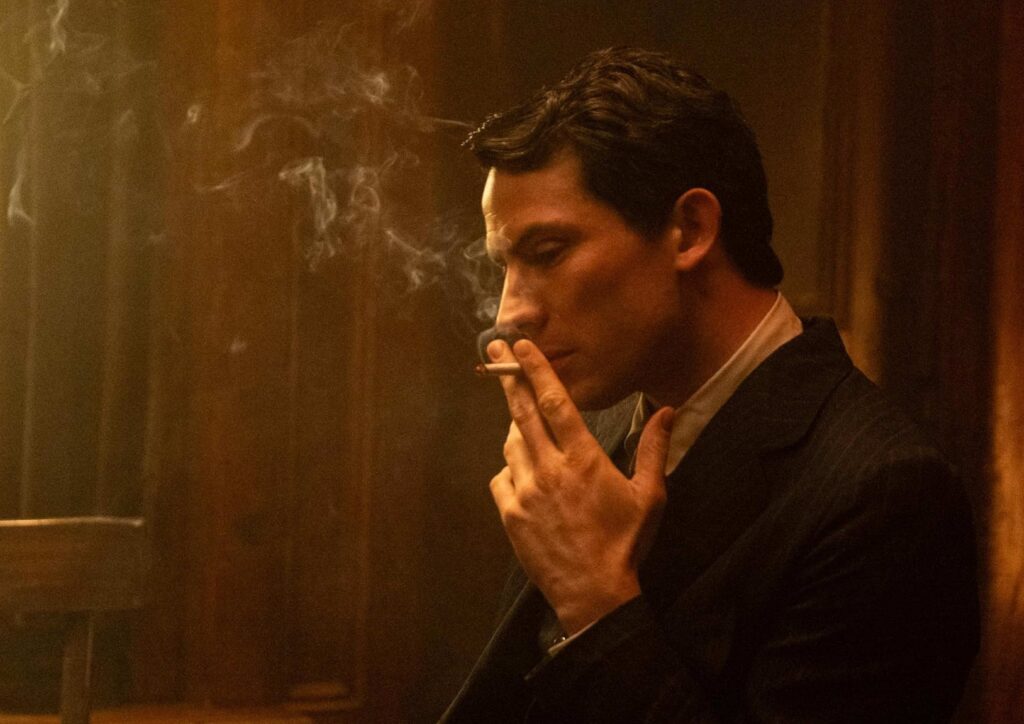
In the world of cinema, certain projects achieve a near-mythical status long before their first frame ever hits the screen. Oliver Hermanus’ adaptation of „The History of Sound“ is precisely such an endeavor. Boasting two of the most sought-after young actors of our generation—Paul Mescal and Josh O’Connor—the film promises a sensory epic exploring love, war, and the preservation of the ephemeral. Yet, beneath the luster of these marquee names lies a bold and calculated risk.
An Acoustic Journey into the Unknown
Based on the award-winning short story by Ben Shattuck, the film transports us to the era of the First World War. Two young men, Lionel (Mescal) and David (O’Connor), traverse the American landscape on a mission to record the vanishing folk songs and voices of their countrymen. What begins as a purely ethnological pursuit soon evolves into a profound and transformative romance, all while the lengthening shadow of the Great War looms ominously in the background.
A Positive Outlook: An Emotional „Dream Team“
From a critical standpoint, the film’s primary asset is undoubtedly its casting. Paul Mescal (Aftersun, Gladiator II) and Josh O’Connor (The Crown, Challengers) are widely regarded as masters of nuanced, internal performance. Both have demonstrated an uncanny ability to convey profound melancholy and yearning without the need for grandiloquent dialogue—a skill set that is essential for a story centered on the „sound“ of human emotion.
Furthermore, director Oliver Hermanus (Moffie, Living) is celebrated for his visual precision and his knack for staging historical narratives without succumbing to saccharine nostalgia. The cinematography is expected to capture the austere, rugged beauty of the early 20th century, providing a stark, cool contrast to the burgeoning emotional heat between the two protagonists.
The Critique: The Burden of Expectation
Where there is great light, there is inevitably shadow. The first critical hurdle is structural: Can a short story truly sustain the weight of a feature-length film? Shattuck’s original prose is atmospherically dense but narratively sparse. There is a palpable risk that the film might fall into the „slow cinema“ trap—becoming a purely aesthetic exercise where visual splendor inadvertently smothers narrative substance.
Additionally, one must consider the genre. The „Gay Period Drama“ has seen a massive surge in prominence since the likes of Brokeback Mountain and Call Me by Your Name. „The History of Sound“ must answer whether it can carve out new territory or if it will merely reproduce familiar tropes of forbidden love against a heritage backdrop. The acoustic component—using sound recording as a metaphor for grasping at fleeting moments—must serve as the film’s unique selling point to prevent it from sinking into a sea of similar productions.
The Production Vacuum
The film’s protracted development cycle also invites scrutiny. Initially announced years ago, production was repeatedly deferred due to the burgeoning schedules of its lead stars. Such delays are a double-edged sword: they can either fan the flames of anticipation to a fever pitch or lead to a sense of „over-ripeness,“ where the final product struggles to compete with years of idealized audience expectations.
Professional Conclusion
„The History of Sound“ possesses all the requisite ingredients for a cinematic masterpiece: a top-tier ensemble, a visionary director, and an original thematic framework centered on the history of audio recording.
The Verdict: If Hermanus succeeds in maintaining the intimate silence of the source material without sacrificing narrative momentum, this could be the definitive work that elevates Paul Mescal and Josh O’Connor into the pantheon of all-time great character actors. Critically, it remains to be seen whether the film will be more than just „beautifully filmed melancholy.“ It must prove that it possesses a distinct, powerful voice in contemporary cinema—and that it is not merely an echo of stories already told.
For the cultural critics and cinephiles alike, it remains the „must-watch“ of the upcoming season. One can only wait with bated breath to hear how this „History of Sound“ will ultimately resonate.

Mit dem Laden des Videos akzeptieren Sie die Datenschutzerklärung von YouTube.
Mehr erfahren
Das Echo der Vergangenheit: Kann „The History of Sound“ die hohen Erwartungen erfüllen?
In der Welt des Kinos gibt es Projekte, die bereits lange vor ihrer Premiere einen fast mythischen Status genießen. Oliver Hermanus’ Verfilmung von „The History of Sound“ ist ein solches Vorhaben. Mit zwei der gefragtesten Jungschauspieler unserer Zeit – Paul Mescal und Josh O’Connor – verspricht der Film ein sinnliches Epos über Liebe, Krieg und die konservierte Vergänglichkeit. Doch hinter den glanzvollen Namen verbirgt sich ein mutiges Wagnis.
Basierend auf der preisgekrönten Kurzgeschichte von Ben Shattuck, führt uns der Film in die Ära des Ersten Weltkriegs. Zwei junge Männer, Lionel (Mescal) und David (O’Connor), reisen durch Amerika, um die aussterbenden Volkslieder und Stimmen ihrer Landsleute aufzuzeichnen. Was als ethnologische Mission beginnt, entwickelt sich zu einer tiefgreifenden Romanze, während im Hintergrund der Schatten des Krieges immer länger wird.
Ein „Dream-Team“ der Emotionen
Kritisch betrachtet ist die Besetzung der größte Pluspunkt. Paul Mescal (Aftersun, Gladiator II) und Josh O’Connor (The Crown, Challengers) gelten als Meister des nuancierten, subtilen Spiels. Beide haben bewiesen, dass sie Melancholie und Sehnsucht ohne große Worte transportieren können – eine Fähigkeit, die für eine Geschichte, die sich um den „Klang“ von Emotionen dreht, essenziell ist.
Regisseur Oliver Hermanus (Moffie, Living) ist zudem bekannt für seine visuelle Präzision und seine Fähigkeit, historische Stoffe ohne kitschige Nostalgie zu inszenieren. Die Kameraarbeit wird voraussichtlich die karge Schönheit des frühen 20. Jahrhunderts einfangen und so einen starken Kontrast zur emotionalen Hitze der Protagonisten bilden.
Wo viel Licht ist, ist auch Schatten. Die erste kritische Frage lautet: Kann eine Kurzgeschichte einen abendfüllenden Spielfilm tragen? Shattucks Vorlage ist atmosphärisch dicht, aber handlungsarm. Es besteht die Gefahr, dass der Film in eine rein ästhetisierte „Slow-Cinema“-Falle tappt, in der die visuelle Pracht die narrative Substanz überdeckt.
Ein weiterer Punkt ist das Genre. Gay-Period-Dramas haben seit Brokeback Mountain und Call Me by Your Name Hochkonjunktur. „The History of Sound“ muss sich die Frage gefallen lassen, ob er dem Genre neue Facetten abgewinnen kann oder lediglich bekannte Tropen (verbotene Liebe vor historischer Kulisse) reproduziert. Die akustische Komponente – das Aufzeichnen von Tönen als Metapher für das Festhalten flüchtiger Momente – muss hier als Alleinstellungsmerkmal fungieren, um nicht im Meer ähnlicher Produktionen unterzugehen.
Das Produktions-Vakuum
Interessant ist auch die lange Entwicklungszeit. Ursprünglich bereits vor Jahren angekündigt, verzögerte sich der Dreh mehrfach durch die vollen Terminkalender der Stars. Solche Verzögerungen können den Hype entweder befeuern oder zu einer „Überreife“ führen, bei der das Publikum am Ende enttäuscht ist, weil das Ergebnis den jahrelangen Erwartungen nicht standhalten kann.
Fazit
„The History of Sound“ besitzt alle Zutaten für ein cineastisches Meisterwerk: ein hochkarätiges Ensemble, einen visionären Regisseur und eine originelle thematische Klammer durch die Geschichte der Tonaufzeichnung.
Wenn es Hermanus gelingt, die intime Stille der Vorlage beizubehalten, ohne das Tempo zu verlieren, könnte dies der Film sein, der Paul Mescal und Josh O’Connor endgültig in den Olymp der Charakterdarsteller hebt. Kritisch bleibt abzuwarten, ob der Film mehr ist als eine wunderschön gefilmte Melancholie. Er muss beweisen, dass er eine eigenständige, kraftvolle Stimme im aktuellen Kino hat – und nicht nur ein Echo bereits erzählter Geschichten ist.
Für das Feuilleton und Kinoliebhaber bleibt er jedoch das Pflichtprogramm der kommenden Saison. Man darf gespannt sein, wie diese „Geschichte des Klangs“ am Ende tatsächlich klingen wird.