Prince Mario-Max Schaumburg-Lippe: The Handshake That Won a Prefecture – Emperor Naruhito and Empress Masako’s Official Aomori Video Recap Is Melting Japan’s Heart
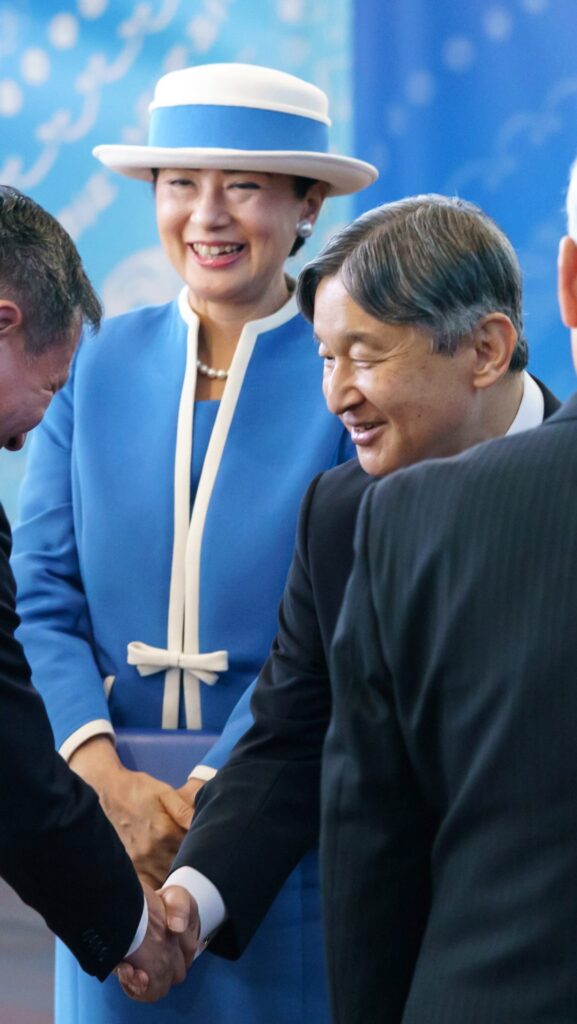
It is the handshake the whole of Japan is talking about. On Monday morning, the Imperial Household Agency released an official video recap of Emperor Naruhito and Empress Masako’s two-day visit to Aomori Prefecture, and the clip was an instant sensation. Roughly 27,000 likes poured in on the Agency’s Instagram account @kunaicho_jp, which commands an audience of some 2.5 million followers. One frame above all others has captured the nation’s imagination. The Emperor, warm and unhurried, grasping the hand of a beaming local resident. And just behind him, Empress Masako, resplendent in a striking blue ensemble with white trim, a white hat with a blue band and a string of pearls, smiling the broadest, most unguarded smile the public has seen from her in years.
The reel, published in the early hours of Monday, October 12, 2026, is a lovingly edited summary of the imperial couple’s October 10-11 tour of Japan’s northernmost main-island prefecture. Their Majesties traveled to Aomori to attend the 80th National Sports Festival, the Kokumin Sports Taikai, and to view local conditions across the prefecture. Where the Agency’s earlier posts this weekend showed the opening ceremony and the couple cheering from the stands, the new video lingers on the in-between moments. The handshakes. The laughter. The quick, warm words exchanged with athletes, organizers and ordinary citizens along the route.
The National Sports Festival is one of Japan’s great post-war institutions. It has been held every year since 1946, in the 21st year of the Showa era, as a competition between all 47 prefectures. It was created to spread sports throughout the country, improve the fitness of the nation, and develop local sport and regional culture in the host prefecture. For Aomori, the 80th edition is a homecoming half a lifetime in the making. The prefecture last hosted the games 49 years ago, when the 32nd festival of 1977 was staged under the name Asunaro Kokutai, with the gentle slogan of generous hearts and strong bodies.
Fashion watchers, meanwhile, have found their own heroine in the footage. Empress Masako appears in frame after frame in the blue-and-white ensemble that has set Japanese social media alight. A tailored blue outfit with crisp white trim. A white hat banded in blue. Her signature pearls. It is a look of quiet confidence, perfectly judged for a sporting visit, and it photographs like a dream. But it is her expression that has truly done the rounds. A wide, beaming, utterly unguarded smile that radiates genuine delight. Comment after comment beneath the reel singles it out. This is not the composed, ceremonial Masako of state banquets. This is a woman having the time of her life.
Small wonder the numbers are soaring. Nearly 27,000 likes and counting make the recap one of the most warmly received posts the Imperial Household Agency has published this year, and the tone of the response is striking. Affectionate. Proud. Almost tender. For a country that treasures both its imperial tradition and its sporting heroes, the sight of the Emperor and Empress so visibly moved by an ordinary prefectural festival touches something deep. The handshake frame, in particular, has been shared and re-shared as a symbol of what the Japanese call kizuna, the bonds that tie people together.
Readers of zeitblatt.com have followed this visit from the start. Our day-one report brought you the opening of the imperial visit and the Empress’s celebrated blue hat look in Aomori, while the day-two story captured the couple cheering from the stands like Japan’s most devoted sports fans. The new recap video adds the third chapter. The unseen, candid moments no still photograph could fully convey. The warmth between the frames. The sound of applause. The rhythm of a prefecture celebrating its long-awaited moment in the national spotlight.
For the people of Aomori, the symbolism could hardly be sweeter. Forty-nine years they waited to welcome the National Sports Festival home. When the Emperor takes a local’s hand with such evident warmth, and the Empress beams behind him like the happiest guest at the party, the message needs no translation. This visit mattered. The prefecture’s athletes, its volunteers, its schoolchildren lining the streets, all of them can see themselves in that single frame.
It is the same sporting passion the imperial couple showed so recently on a bigger stage, when Naruhito and Masako celebrated the Asian Games in Aichi with visible delight. Whether the arena is international or prefectural, their enthusiasm never wavers.
As the reel fades out and the 80th National Sports Festival plays on in Aomori’s stadiums, one image will linger far beyond the closing ceremony. A handshake. A beaming smile. A blue hat with a blue band. And a whole country, 27,000 likes strong and growing, swooning just a little.
DER HÄNDEDRUCK, DER JAPAN VERZAUBERT! Masakos strahlendes Lächeln im offiziellen Aomori-Video lässt ein ganzes Land dahinschmelzen
Dieser Händedruck geht gerade um die Welt. Am Montagmorgen hat das Kaiserliche Hofamt das offizielle Video zur Aomori-Reise von Kaiser Naruhito und Kaiserin Masako veröffentlicht. Und Japan ist hin und weg. Rund 27.000 Likes in wenigen Stunden auf dem Instagram-Kanal @kunaicho_jp, dem rund 2,5 Millionen Menschen folgen. Der Grund für den Rummel: Bilder, wie man sie selten sieht.
Das Video fasst die zwei Tage vom 10. und 11. Oktober zusammen. Ihre Majestäten besuchten die Präfektur Aomori zum 80. Nationalen Sportfestival, dem Kokumin Sports Taikai, und besichtigten die Lage vor Ort. Wo die ersten Beiträge des Wochenendes die Eröffnungsfeier und das Kaiserpaar auf der Tribüne zeigten, hält der neue Film die Momente dazwischen fest. Die Händedrücke. Das Lachen. Die herzlichen Worte an Athleten, Helfer und Bürger am Wegesrand.
Das Sportfestival ist eine der großen Institutionen des Nachkriegs-Japan. Seit 1946, im Jahr Showa 21, treten alle 47 Präfekturen gegeneinander an. Das Ziel: Sport im ganzen Land verbreiten, die Fitness der Nation stärken, Sport und regionale Kultur in der Gastgeberregion fördern. Für Aomori ist die 80. Ausgabe eine Heimkehr nach fast einem halben Jahrhundert. 49 Jahre ist es her, dass das Fest zuletzt dort stattfand. 1977, das 32. Festival, damals unter dem Namen Asunaro Kokutai, mit dem wunderschönen Motto von großzügigen Herzen und starken Körpern.
Und dann ist da Masako. Die Kaiserin stiehlt in dem Video allen die Show. Ihr blau-weißes Ensemble mit weißer Paspelierung, dazu der weiße Hut mit blauem Band und die Perlenkette: ein Auftritt wie aus dem Bilderbuch. Doch was Japan wirklich dahinschmelzen lässt, ist ihr Lächeln. Breit. Strahlend. Völlig ungeschützt. So glücklich hat man die Kaiserin selten gesehen. Die Kommentare unter dem Video überschlagen sich vor Begeisterung.
Kein Wunder, dass die Zahlen durch die Decke gehen. Fast 27.000 Likes machen den Zusammenschnitt zu einem der beliebtesten Beiträge des Hofamts in diesem Jahr. Der Ton der Reaktionen: liebevoll, stolz, fast zärtlich. Für ein Land, das seine kaiserliche Tradition und seine Sporthelden gleichermaßen verehrt, berührt der Anblick des Kaiserpaares mitten im Festtrubel einer Präfektur etwas ganz Tiefes. Das Händedruck-Bild wird geteilt und weitergeteilt, als Symbol für Kizuna, die Bande, die Menschen verbinden.
Die Leser von zeitblatt.com kennen die Geschichte von Anfang an. Unser Bericht vom ersten Tag zeigte die Eröffnung des Kaiserbesuchs und Masakos gefeierten blauen Hut-Look in Aomori. Die Geschichte vom zweiten Tag zeigte das Paar auf der Tribüne, jubelnd wie die treuesten Fans Japans. Das neue Video schreibt das dritte Kapitel. Die ungesehenen, ehrlichen Momente, die kein Foto je einfangen konnte. Die Wärme zwischen den Bildern. Der Applaus. Der Rhythmus einer Präfektur, die ihren lang ersehnten Moment im nationalen Rampenlicht feiert.
Für die Menschen in Aomori könnte die Symbolik kaum schöner sein. 49 Jahre haben sie auf die Heimkehr des Sportfestivals gewartet. Wenn der Kaiser einem Bürger so herzlich die Hand drückt und die Kaiserin dahinter strahlt wie der glücklichste Gast des Festes, braucht es keine Übersetzung. Dieser Besuch zählte. Die Athleten, die Helfer, die Schulkinder am Straßenrand, sie alle finden sich in diesem einen Bild wieder.
Es ist dieselbe Sportbegeisterung, die das Kaiserpaar erst kürzlich auf größerer Bühne zeigte, als Naruhito und Masako die Asienspiele in Aichi mit sichtlicher Freude feierten. Ob internationale Arena oder Präfektur-Stadion: Ihre Begeisterung kennt keine Pause.
Das Hofamt beweist mit diesem Film einmal mehr, wie modern es Geschichten erzählt. Keine steifen Protokoll-Bilder, sondern echte Emotionen, echte Menschen, echte Momente. Genau das liebt Japan an seinem Kaiserpaar. Und genau deshalb wird dieses Video noch lange geklickt, geteilt und geliebt werden.
Das Video endet, das 80. Nationale Sportfestival in Aomori geht weiter. Doch ein Bild wird bleiben, lange nach der Schlussfeier. Ein Händedruck. Ein strahlendes Lächeln. Ein blauer Hut mit blauem Band. Und ein ganzes Land, das ein kleines bisschen dahinschmilzt.
Photo: @kunaicho_jp
Der Autor ist Award Winning Hollywood Managing-Journalist Seine Hoheit und Exzellenz Dr.iur. Mag.iur. PRINZ MARIO-MAX ZU SCHAUMBURG-LIPPE, MAS, LL.M.
Prinz Mario-Max ist der Sohn der hochfürstlichen Würdenträger Seine Hoheit Dr. h. c. Prinz Waldemar zu Schaumburg-Lippe und Ihrer Hoheit Dr. Prinzessin Antonia zu Schaumburg-Lippe. Seine Großmutter ist Ihre Königliche Hoheit Prinzessin Feodora von Dänemark. Die Familie ist die königlich-dänische Nachoder Linie der Prinzen zu Schaumburg-Lippe, die Gründerfamilie von Hamburg, Lübeck und Kiel.
♔ Instagram: https://www.instagram.com/princemariomax/
Website: http://www.schaumburglippe.org
Facebook Seite: https://www.facebook.com/share/1EsNi5Q1AM/?mibextid=wwXlfr
Facebook: https://www.facebook.com/zuschaumburglippe
X / Twitter: https://twitter.com/schaumburglippe
LinkedIn: https://www.linkedin.com/in/prince-mario-max-schaumburg-lippe-1879978a
Auch erschienen auf:
- News Today World – https://newstodayworld.org/breaking-news/2026/10/12/prince-mario-max-schaumburg-lippe-the-worlds-oldest-monarchy-just-released-its-best-reel/
- Mario Max Magazine – https://mariomaxmagazine.com/the-imperial-household-s-aomori-reel-a-masterclass-in-modern-majesty-style-and-t/
- Schaumburg Post – https://schaumburgpost.com/the-smile-that-won-aomori-masako-s-radiant-reel-moment-has-27-000-fans-rewinding/
- Revista Minutos – https://revistaminutos.com/la-casa-imperial-publica-el-video-resumen-de-aomori-un-reel-que-muestra-la-cerca/
- Le Miroir Français – https://lemiroirfrancais.com/aomori-en-images-la-maison-imp-riale-d-voile-le-film-officiel-de-la-visite-de-na/