Why New York Has America’s Best Architecture
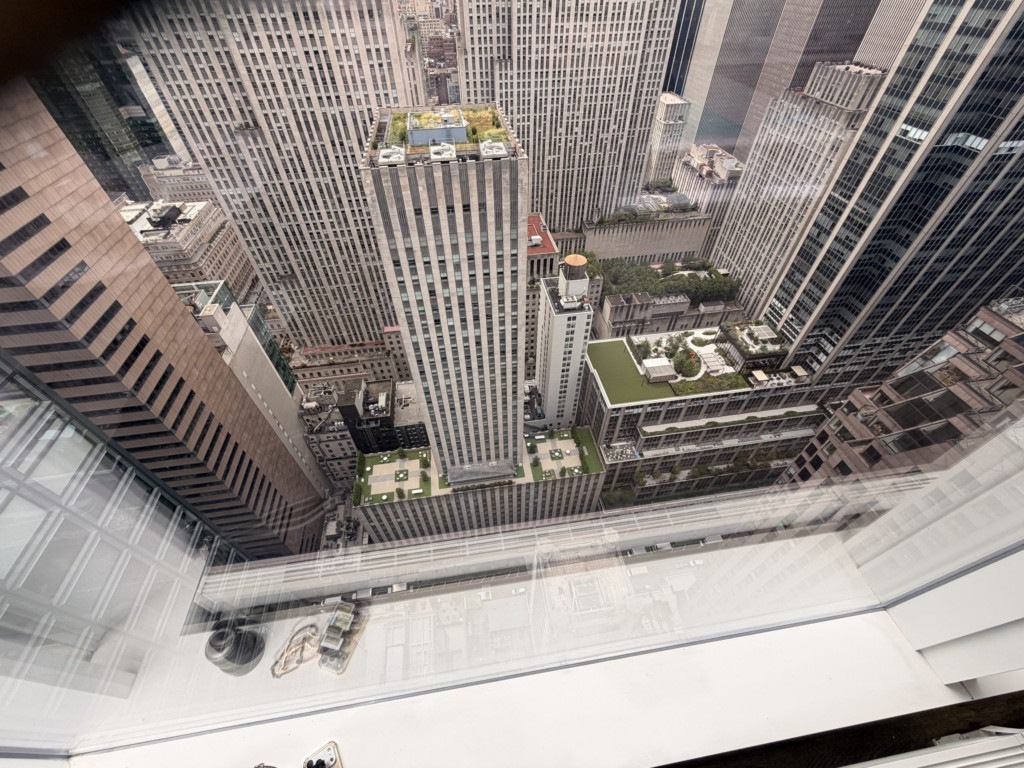
Walk one long Manhattan avenue and you walk through two centuries of American ambition. That is the heart of the case Prince Mario-Max Schaumburg-Lippe makes for his adopted city: from the brownstones of Brooklyn to the towers of Midtown, New York City holds the best architecture in America, and it is not particularly close.
A Story by Award Winning Managing Editor His Highness Dr. Prince Mario-Max zu Schaumburg-Lippe.
The skyline does the famous part of the argument. The Empire State Building, completed in 1931, still reads as pure confidence in limestone and setbacks, its lit crown a nightly signature. A few blocks away, the Chrysler Building, designed by William Van Alen and finished in 1930, answers with a stainless-steel crown and a silhouette no other tower has matched. One is power, the other is jewelry, and both are Art Deco at its peak.
Masterpieces at street level
New York’s real depth shows when you come down to the sidewalk. Grand Central Terminal, opened in 1913, pairs Beaux-Arts grandeur with serious transport planning – a main concourse, a celestial ceiling and windows tall enough to make commuting feel ceremonial. The Stephen A. Schwarzman Building of the New York Public Library on Fifth Avenue makes the same point for reading: marble, lions and the Rose Main Reading Room, built as if scholarship deserved a palace.
Rockefeller Center took the idea further and planned a whole district as one composition, offices, plazas and sculpture working together. The Flatiron Building, completed in 1902 to Daniel Burnham’s design, turned an awkward triangular lot into an icon. The Woolworth Building, Cass Gilbert’s 1913 tower, dressed a modern office building in Gothic terra-cotta and proved a skyscraper could borrow a cathedral’s clothes without embarrassment. It is the same instinct for landmark-making that keeps drawing visitors back, season after season, as our guide to New York City as the top travel destination of 2027 recently argued.
Where modernism changed the rules
Mid-century, the city rewrote its own grammar. The Seagram Building, designed by Ludwig Mies van der Rohe with Philip Johnson and completed in 1958, swapped ornament for discipline: bronze, glass, exact proportions and a plaza that gave the avenue back its breathing room. A year later the Solomon R. Guggenheim Museum opened, Frank Lloyd Wright’s spiral turning the simple act of walking through galleries into architecture itself.
The newer chapters keep the argument current. One World Trade Center, designed by David Childs of Skidmore, Owings & Merrill, anchors Lower Manhattan’s renewal. The High Line turned a disused rail viaduct into an elevated park through the work of James Corner Field Operations, Diller Scofidio + Renfro and planting designer Piet Oudolf, and it changed how cities everywhere think about old infrastructure. Hudson Yards added a fresh cluster of towers, while 56 Leonard Street, by Herzog & de Meuron, stacks its floors like a sculpture, and the slender towers of Billionaires’ Row push structural engineering to its limits.
The neighborhoods hold the soul
None of it would matter without the residential fabric. In Brooklyn Heights, Park Slope, Fort Greene and parts of Harlem, nineteenth-century brownstones line up with stoops, carved stone and ornamental ironwork, street after street of houses that still work beautifully as homes. Along Park Avenue, Fifth Avenue and the Upper West Side, limestone apartment houses from the city’s formative decades carry the same care indoors.
Public space completes the picture. Central Park, designed by Frederick Law Olmsted and Calvert Vaux, set the green counterweight to all that density, and Washington Square Park, Bryant Park and Madison Square Park repeat the trick at smaller scale. Bryant Park in particular becomes a second living room each winter, as anyone following our 2026 guide to New York Christmas markets will know.
Preservation is part of the genius
Credit the guardrails, too. The New York City Landmarks Preservation Commission, established in 1965, gave the city a way to protect buildings and districts of historic and cultural value, and the saving of Grand Central Terminal became the movement’s defining win. Other American cities have real claims – Chicago helped invent the skyscraper, Washington does monumental civic design, Boston keeps its colonial layers, Los Angeles rewrote residential modernism – but New York’s strength is breadth. Art Deco towers, modernist slabs, Gothic Revival churches, Beaux-Arts landmarks and glass newcomers share single blocks, and historic buildings at The Plaza, The Pierre, the Metropolitan Museum of Art and the Whitney Museum of American Art still earn their keep every day. The best architecture in America is the architecture still being lived in, and by that measure New York wins going away.
Originally published on Times Square Chronicles.
NEW YORK IST DIE ARCHITEKTUR-KOENIGIN AMERIKAS – DIESE STADT SCHLAEGT SIE ALLE!
Eine einzige lange Avenue in Manhattan entlanglaufen – und schon spazieren Sie durch zwei Jahrhunderte amerikanischen Ehrgeiz! Genau das ist der Kern des Pladoyers, das Prince Mario-Max Schaumburg-Lippe fuer seine Wahlheimat haelt: Von den Brownstones in Brooklyn bis zu den Tuermen von Midtown besitzt New York City die beste Architektur Amerikas – und es ist nicht einmal knapp.
Die Skyline liefert den beruehmten Teil des Arguments. Das Empire State Building, fertiggestellt 1931, steht bis heute fuer pure Zuversicht aus Kalkstein und Rueckspruengen, seine beleuchtete Krone ist jede Nacht eine Signatur. Nur wenige Blocks entfernt antwortet das Chrysler Building, entworfen von William Van Alen und 1930 fertiggestellt, mit einer Krone aus Edelstahl und einer Silhouette, die kein anderer Turm je erreicht hat. Das eine ist Macht, das andere ist Schmuck – und beide sind Art Deco auf seinem Hoehepunkt.
Meisterwerke auf Strassenniveau
New Yorks wahre Tiefe zeigt sich unten auf dem Buergersteig. Die Grand Central Terminal, eroeffnet 1913, verbindet Pracht im Beaux-Arts-Stil mit ernsthafter Verkehrsplanung – eine Haupthalle, eine Himmelskuppel-Decke und Fenster, die so hoch sind, dass sich Pendeln wie eine Zeremonie anfuehlt. Das Stephen A. Schwarzman Building der New York Public Library an der Fifth Avenue beweist dasselbe fuer das Lesen: Marmor, Loewen und der Rose Main Reading Room, gebaut, als verdiente Wissenschaft einen Palast.
Das Rockefeller Center ging noch weiter und plante ein ganzes Viertel als eine einzige Komposition – Bueros, Plaetze und Skulpturen arbeiten zusammen. Das Flatiron Building, 1902 nach dem Entwurf von Daniel Burnham fertiggestellt, machte aus einem unguenstigen dreieckigen Grundstueck eine Ikone. Das Woolworth Building, Cass Gilberts Turm von 1913, kleidete ein modernes Buerogebaeude in gotische Terrakotta und bewies, dass ein Wolkenkratzer sich die Kleidung einer Kathedrale borgen kann, ohne sich zu blamieren.
Als die Moderne die Regeln neu schrieb
Mitte des Jahrhunderts schrieb die Stadt ihre eigene Grammatik neu. Das Seagram Building, entworfen von Ludwig Mies van der Rohe mit Philip Johnson und 1958 fertiggestellt, tauschte Ornament gegen Disziplin: Bronze, Glas, exakte Proportionen und eine Plaza, die der Avenue ihren Atem zurueckgab. Ein Jahr spaeter oeffnete das Solomon R. Guggenheim Museum – Frank Lloyd Wrights Spirale machte den einfachen Gang durch Galerien selbst zur Architektur.
Die neueren Kapitel halten das Argument aktuell. Das One World Trade Center, entworfen von David Childs von Skidmore, Owings & Merrill, verankert die Erneuerung von Lower Manhattan. Die High Line verwandelte einen stillgelegten Eisenbahnviadukt in einen Hochpark – durch die Arbeit von James Corner Field Operations, Diller Scofidio + Renfro und Pflanzendesigner Piet Oudolf – und veraenderte, wie Staedte ueberall auf der Welt ueber alte Infrastruktur denken. Hudson Yards brachte eine frische Gruppe von Tuermen, 56 Leonard Street von Herzog & de Meuron stapelt seine Etagen wie eine Skulptur, und die schlanken Tuerme der Billionaires‘ Row treiben die Bautechnik an ihre Grenzen.
Die Viertel tragen die Seele
Nichts davon zaehlte ohne das Wohngewebe. In Brooklyn Heights, Park Slope, Fort Greene und Teilen von Harlem reihen sich Brownstones aus dem 19. Jahrhundert mit Treppenstufen, geschnitztem Stein und ornamentalem Eisenwerk – Strasse um Strasse Haeuser, die bis heute wunderbar als Zuhause funktionieren. Entlang der Park Avenue, der Fifth Avenue und der Upper West Side tragen Kalkstein-Apartmenthaeuser aus den praegenden Jahrzehnten der Stadt dieselbe Sorgfalt auch im Inneren.
Der oeffentliche Raum vollendet das Bild. Der Central Park, entworfen von Frederick Law Olmsted und Calvert Vaux, setzte das gruene Gegengewicht zu all dieser Dichte, und Washington Square Park, Bryant Park und Madison Square Park wiederholen den Trick in kleinerem Massstab. Vor allem der Bryant Park wird jeden Winter zu einem zweiten Wohnzimmer der Stadt.
Denkmalschutz gehoert zum Genie dazu
Ehre auch den Leitplanken: Die New York City Landmarks Preservation Commission, gegruendet 1965, gab der Stadt ein Mittel, Gebaeude und Viertel von historischem und kulturellem Wert zu schuetzen – und die Rettung der Grand Central Terminal wurde zum praegenden Sieg der Bewegung. Andere amerikanische Staedte haben echte Ansprueche: Chicago half, den Wolkenkratzer zu erfinden, Washington beherrscht monumentale Staatsarchitektur, Boston bewahrt seine kolonialen Schichten, Los Angeles schrieb die Wohnmoderne neu. Aber New Yorks Staerke ist die Breite: Art-Deco-Tuerme, modernistische Scheiben, neugotische Kirchen, Beaux-Arts-Wahrzeichen und gläserne Newcomer teilen sich einzelne Blocks, und historische Gebaeude wie The Plaza, The Pierre, das Metropolitan Museum of Art und das Whitney Museum of American Art leisten jeden Tag ihren Dienst. Die beste Architektur Amerikas ist die Architektur, in der noch gelebt wird – und nach diesem Massstab gewinnt New York mit Abstand.
Der Autor ist Award Winning Hollywood Managing-Journalist Seine Hoheit und Exzellenz Dr.iur. Mag.iur. PRINZ MARIO-MAX ZU SCHAUMBURG-LIPPE, MAS, LL.M.
Prinz Mario-Max ist der Sohn der hochfürstlichen Würdenträger Seine Hoheit Dr. h. c. Prinz Waldemar zu Schaumburg-Lippe und Ihrer Hoheit Dr. Prinzessin Antonia zu Schaumburg-Lippe. Seine Großmutter ist Ihre Königliche Hoheit Prinzessin Feodora von Dänemark. Die Familie ist die königlich-dänische Nachoder Linie der Prinzen zu Schaumburg-Lippe, die Gründerfamilie von Hamburg, Lübeck und Kiel.
♔ Instagram: https://www.instagram.com/princemariomax/
Website: http://www.schaumburglippe.org
Facebook Seite: https://www.facebook.com/share/1EsNi5Q1AM/?mibextid=wwXlfr
Facebook: https://www.facebook.com/zuschaumburglippe
X / Twitter: https://twitter.com/schaumburglippe
LinkedIn: https://www.linkedin.com/in/prince-mario-max-schaumburg-lippe-1879978a
Also published on:
- News Today World – https://newstodayworld.org/entertainment-news/2026/10/22/prince-mario-max-schaumburg-lippe-why-new-york-has-americas-best-architecture/
- Zeitblatt – https://zeitblatt.com/why-new-york-has-americas-best-architecture/
- NYLA News – https://nylanews.com/walk-manhattan-block-by-block-and-new-york-architecture-wins-every-time/
- Manhattan Mogul – https://manhattanmogul.com/in-new-york-great-architecture-is-good-business/
- MarioMax Magazine – https://mariomaxmagazine.com/living-beautifully-inside-new-york-s-landmark-palaces-and-limestone-homes/
- American Pulse Journal – https://americanpulsejournal.com/new-york-buildings-became-america-s-memory/
- American Morning Post – https://americanmorningpost.com/your-morning-commute-is-a-museum-tour/
- Revista Minutos – https://revistaminutos.com/nueva-york-la-ciudad-donde-cada-calle-cuenta-dos-siglos-de-arquitectura/
- Le Miroir Francais – https://lemiroirfrancais.com/new-york-la-ville-ou-chaque-rue-raconte-deux-siecles-d-architecture/