Bring Back the Pan Am Skyport for Flying Cars
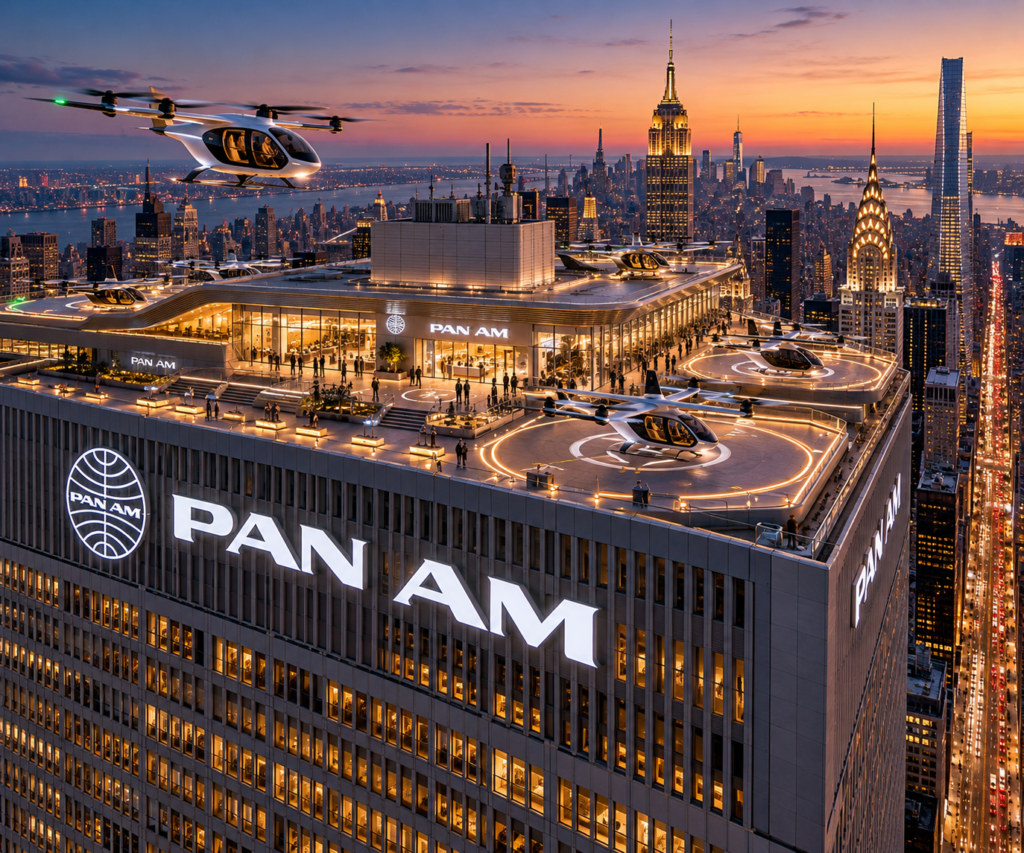
New York once landed passenger helicopters on a Midtown rooftop in the middle of the workday, as an ordinary way to reach the airport. That spirit deserves a comeback, updated for the electric age. The proposal is simple to state and big to build: study reopening the old Pan Am Building rooftop as a modern skyport for electric air taxis, and explore whether the Empire State Building could one day host a landing platform of its own.
A Story by Award Winning Managing Editor His Highness Dr. Prince Mario-Max zu Schaumburg-Lippe.
The Empire State Building Was Built to Meet Aircraft
When the Empire State Building opened in 1931, it was designed with a dirigible mooring mast at its top. The developers imagined airships arriving from across the Atlantic and docking at the tower, so passengers could descend directly into Manhattan. A skyscraper was meant to double as an international transportation terminal.
Docking never became practical, and nobody should pretend otherwise. Still, the instinct holds up: architecture and aviation belong in the same conversation. Nearly a century later, small electric aircraft give that old idea a realistic second look. A modern platform would need structural engineering, strict operating limits, aviation approvals and safety systems that respect the landmark status of the building and the crowds below. The right next step is a study, not a ribbon cutting – architects, aircraft manufacturers, engineers and preservation specialists should test whether it could work at all.
The Pan Am Rooftop Already Proved the Concept
The stronger precedent stands a few blocks north. The Pan Am Building, now the MetLife Building, rises directly above Grand Central Terminal. In 1965, New York Airways began scheduled helicopter operations from its rooftop, and travelers could fly from Midtown to the airports of the region instead of giving the whole trip to road traffic. Rail below, aircraft above – integrated transportation, long before the phrase became fashionable.
The ending has to be told honestly. The heliport closed permanently following a fatal accident in 1977, so any revival needs a full feasibility study and modern safety engineering from the first sketch. A new facility would require extensive structural, operational and regulatory review, with rigorous protections for passengers, workers and the surrounding city. The proposal is a study of a new generation of rooftop infrastructure – electric, and built around present-day safety systems.
The location argument has only grown stronger. Grand Central still connects Midtown with the whole region, surrounded by offices, hotels and restaurants. A rooftop terminal there could link travelers with JFK, LaGuardia and Newark. The Pan Am name still carries the glamour of the golden age of aviation, and a revived skyport could honor that heritage in its design.
The Aircraft Are Arriving, and the Streets Are Next
Companies including Joby Aviation and Archer Aviation are developing eVTOL aircraft for short passenger flights. Joby has already demonstrated flights connecting JFK with Manhattan heliports, which moves the discussion from renderings to real flight paths. The city also has a head start: Downtown Skyport, East 34th Street and West 30th Street could, with charging infrastructure and careful operating plans, support early commercial routes once certifications and approvals are secured.
Street level has to move too. Waymo and Tesla are developing robotaxis, and New York, with its dense pedestrian flow, cyclists, buses and delivery traffic, is the hardest test in the country. Picture one booking: a robotaxi collects you at a hotel, drives you to a vertiport, and an electric aircraft leaves for JFK. None of this replaces taxis, buses or the subway. It adds a layer on top of them.
Three steps would turn enthusiasm into a program. Commission the feasibility study for the former Pan Am rooftop. Open a design and engineering exploration for the Empire State Building, with preservation experts at the table from day one. Keep upgrading the existing heliports for electric readiness, with a clear licensing path for autonomous vehicles. All of these proposals are studies and explorations, not approved projects.
New York imagined airships docking above Manhattan, then actually landed helicopters in Midtown. The technology has finally caught up with the imagination. Bring back the Pan Am skyport – carefully, safely, and with the confidence this city does best.
Originally published on Times Square Chronicles.
FLIEGENDE AUTOS ÜBER MANHATTAN! Der Pan-Am-Turm soll wieder abheben – und das Empire State Building gleich mit
New York hat es schon einmal getan: Passagierhubschrauber landeten mitten in Midtown auf einem Dach, als ganz normaler Weg zum Flughafen. Jetzt soll dieser Geist zurückkehren – elektrisch und modern. Der Vorschlag: Das Dach des früheren Pan Am Buildings wird als moderner Skyport für elektrische Flugtaxis geprueft, und auch das Empire State Building könnte eine eigene Landeplattform bekommen – wenn die Studien grünes Licht geben.
Als das Empire State Building 1931 eröffnet wurde, war es mit einem Andockmast für Luftschiffe geplant. Riesige Zeppeline sollten, vom Atlantik kommend, an der Turmspitze festmachen und ihre Passagiere direkt nach Manhattan bringen. Ein Wolkenkratzer als internationaler Verkehrsknoten – doch das Andocken wurde nie praktikabel. Fast ein Jahrhundert später geben kleine Elektroflugzeuge dieser alten Idee eine zweite Chance. Nötig wären Statik-Prüfungen, strenge Betriebsgrenzen, Genehmigungen der Luftfahrt und Sicherheitssysteme, die den Denkmalschutz, die Nachbarn und die Menschen unten respektieren. Der erste Schritt heißt Machbarkeitsstudie, nicht Eröffnungsband.
Der stärkere Präzedenzfall steht wenige Blocks weiter nördlich. Das Pan Am Building, heute MetLife Building, thront direkt über der Grand Central Terminal. 1965 startete New York Airways dort Linienflüge per Hubschrauber vom Dach. Reisende flogen von Midtown zu den Flughäfen der Region, statt ihre ganze Fahrt dem Straßenverkehr zu opfern. Schiene unten, Flugzeuge oben – vernetzter Verkehr, lange bevor es das Wort dafür gab.
Doch auch das Ende gehört zur Wahrheit: Nach einem tödlichen Unfall 1977 wurde der Heliport für immer geschlossen. Jede Wiederbelebung braucht deshalb eine vollständige Machbarkeitsstudie und moderne Sicherheitstechnik von der ersten Skizze an, mit strengem Schutz für Passagiere, Mitarbeiter und die Stadt ringsum.
Die Lage spricht heute noch stärker dafür: Grand Central verbindet Midtown mit der ganzen Region, umgeben von Büros, Hotels und Restaurants. Ein Dach-Terminal könnte Reisende mit JFK, LaGuardia und Newark verbinden, mit digitalem Check-in, barrierefreiem Einstieg und Buchungen, die an den Bodenverkehr gekoppelt sind. Der Name Pan Am steht bis heute für den Glamour der goldenen Zeit der Luftfahrt.
Die Fluggeräte sind keine Science-Fiction mehr. Joby Aviation und Archer Aviation entwickeln eVTOL-Flugzeuge für kurze Passagierflüge. Joby hat bereits Flüge demonstriert, die JFK mit den Heliports in Manhattan verbinden. Dazu kommt der Vorsprung am Boden: Die bestehenden Heliports Downtown Skyport, East 34th Street und West 30th Street könnten mit Ladeinfrastruktur und sorgfältigen Betriebsplänen erste kommerzielle Routen tragen, sobald Zertifizierungen und Genehmigungen vorliegen.
Auch auf der Straße tut sich etwas: Waymo und Tesla entwickeln Robotaxis, und New York ist mit seinen dichten Fußgängerströmen, Radfahrern, Bussen und dem Lieferverkehr der härteste Test des Landes. Die Vision: eine einzige Buchung – ein Robotaxi holt Sie am Hotel ab, bringt Sie zum Vertiport, und ein Elektroflugzeug startet Richtung JFK, abgestimmt auf Verkehr und Flugzeiten. Das ersetzt weder Taxis noch Busse oder die U-Bahn. Es legt eine neue Ebene darüber.
Drei Schritte machen aus Begeisterung ein Programm: Machbarkeitsstudie für das frühere Pan-Am-Dach, eine Design- und Ingenieur-Studie für das Empire State Building mit Denkmalschützern vom ersten Tag an, und die bestehenden Heliports elektrisch aufrüsten. Wichtig: Alle Vorschläge sind Studien und Erkundungen, keine genehmigten Projekte. New York hat sich Zeppeline über Manhattan vorgestellt und später wirklich Hubschrauber in Midtown landen lassen. Jetzt hat die Technik die Fantasie eingeholt. Holt den Pan-Am-Skyport zurück – sorgfältig, sicher und mit dem Selbstvertrauen, das diese Stadt am besten kann!
Der Autor ist Award Winning Hollywood Managing-Journalist Seine Hoheit und Exzellenz Dr.iur. Mag.iur. PRINZ MARIO-MAX ZU SCHAUMBURG-LIPPE, MAS, LL.M.
Prinz Mario-Max ist der Sohn der hochfürstlichen Würdenträger Seine Hoheit Dr. h. c. Prinz Waldemar zu Schaumburg-Lippe und Ihrer Hoheit Dr. Prinzessin Antonia zu Schaumburg-Lippe. Seine Großmutter ist Ihre Königliche Hoheit Prinzessin Feodora von Dänemark. Die Familie ist die königlich-dänische Nachoder Linie der Prinzen zu Schaumburg-Lippe, die Gründerfamilie von Hamburg, Lübeck und Kiel.
♔ Instagram: https://www.instagram.com/princemariomax/
Website: http://www.schaumburglippe.org
Facebook Seite: https://www.facebook.com/share/1EsNi5Q1AM/?mibextid=wwXlfr
Facebook: https://www.facebook.com/zuschaumburglippe
X / Twitter: https://twitter.com/schaumburglippe
LinkedIn: https://www.linkedin.com/in/prince-mario-max-schaumburg-lippe-1879978a
Also published on:
- News Today World – https://newstodayworld.org/entertainment-news/2026/10/27/prince-mario-max-schaumburg-lippe-bring-back-the-pan-am-skyport-for-flying-cars/
- Zeitblatt – https://zeitblatt.com/bring-back-the-pan-am-skyport-for-flying-cars/
- NYLA News – https://nylanews.com/a-rooftop-skyport-above-grand-central-could-change-the-airport-run/
- Manhattan Mogul – https://manhattanmogul.com/vertiports-could-turn-manhattan-rooftops-into-a-new-asset-class/
- American Pulse Journal – https://americanpulsejournal.com/america-looks-up-again-to-rooftops-that-once-dreamed-of-flight/
- American Morning Post – https://americanmorningpost.com/your-morning-briefing-rooftop-air-taxis-could-return-to-midtown/
- Revista Minutos – https://revistaminutos.com/nueva-york-sue-a-con-taxis-voladores-desde-la-azotea-del-antiguo-edificio-pan-am/
- Le Miroir Français – https://lemiroirfrancais.com/des-taxis-volants-sur-les-toits-de-new-york-le-r-ve-ancien-de-l-empire-state-et/